Skiing in Auli: What a Course Costs, and Why GMVN Runs None in December
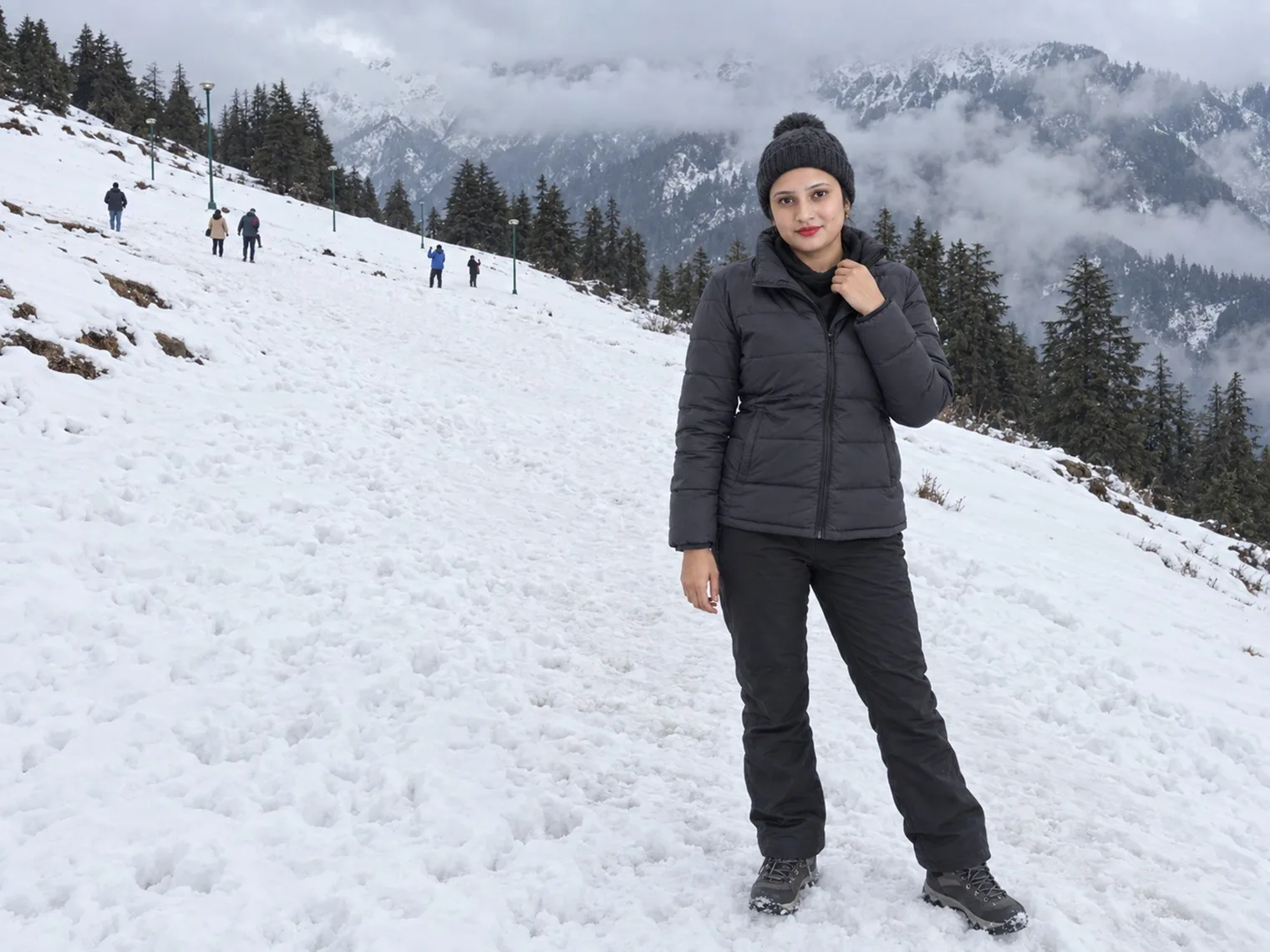
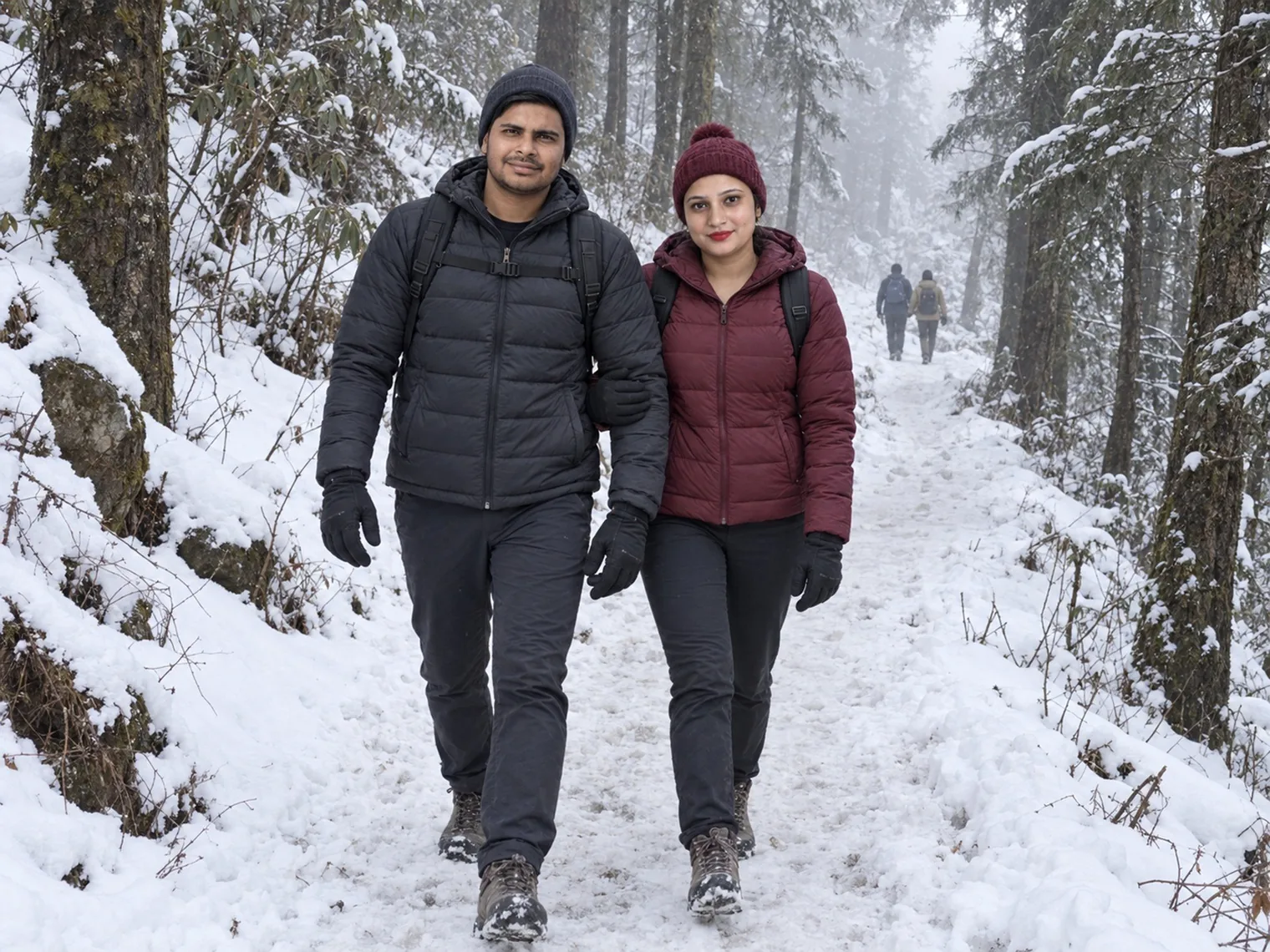
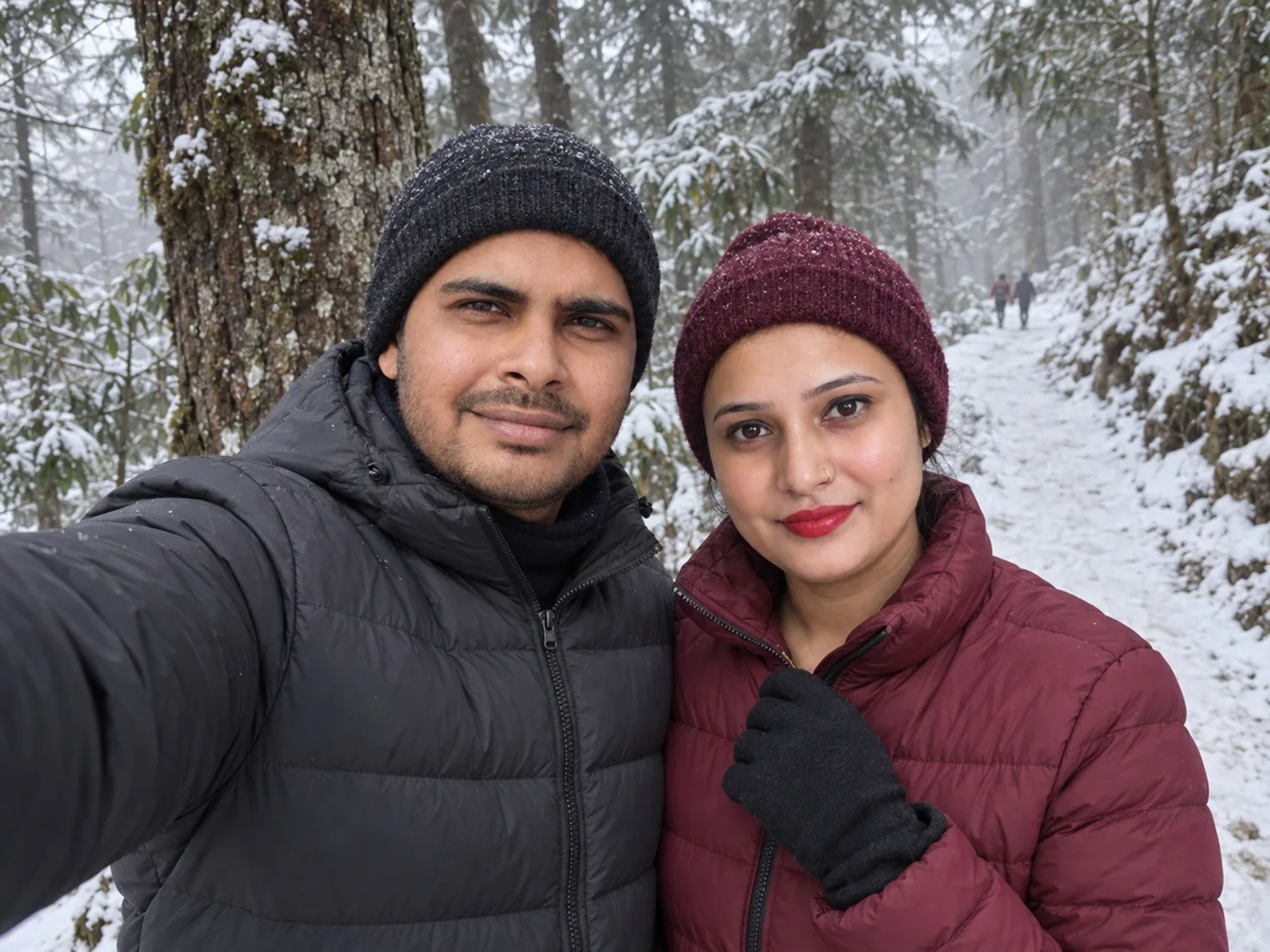
We spent 25 January 2026 at Auli, two days after that winter's first real snowfall, staying below the top at Sunil. We didn't ski that day, and we never have. Neither of us has had a ski lesson, hired a pair of skis or ridden the Auli chairlift. We're not skiers. We wrote this for people who want to be, from the records we could check: what the courses cost, what the terms say if the snow fails, and GMVN's own January-to-March calendar.
Auli is in Chamoli district, Uttarakhand, at the top of an 11 to 16 km climb, depending on the route, from the town that's officially Jyotirmath and that nearly everybody still calls Joshimath. Himachal Pradesh has an Auli of its own, and a few sites mix the two up. A page with the state wrong won't have the fees right either.
How much does skiing in Auli cost?
Rs 4,800 for a three-day beginner course from GMVN if you sort out your own bed, and Rs 8,900 with a bed and meals included. That's Rs 1,600 a teaching day, the cheapest course we found at Auli. GMVN, the Garhwal Mandal Vikas Nigam, is the state tourism corporation, and it has run the public ski school here for decades. It publishes its whole fee card, which is more than the private operators do, and the card hasn't changed in three published seasons.
| Who | 3 days, with bed and meals | 3 days, course only | 7 days, with bed and meals | 7 days, course only | 14 days, certificate | 14 days, course only |
|---|---|---|---|---|---|---|
| Indian adult | Rs 8,900 | Rs 4,800 | Rs 19,900 | Rs 10,000 | Rs 39,000 | Rs 19,000 |
| Foreign national | Rs 15,000 | Rs 7,500 | Rs 30,000 | Rs 15,000 | Rs 60,000 | Rs 30,000 |
| Chamoli resident | not offered | Rs 3,800 | not offered | Rs 8,000 | not offered | Rs 15,000 |
The course-only column is the one that changes the decision. GMVN says the fee covers ski boots and poles, the ski lifts and the training, so nobody on a course buys lift tickets on top. The lodging half is shared accommodation in dormitories with Indian meals, in GMVN's own words, which matters when you set it against a hotel package.
Chamoli residents pay half the foreigner rate for the 14-day course, Rs 15,000 against Rs 30,000, course-only against course-only. They qualify with an Aadhaar card showing the district, and they aren't offered a lodging tier at all.
If you aren't on a course, gear is hired by the day, and GMVN publishes that card too.
| Item | Rate |
|---|---|
| Ski set, adult | Rs 800 per pair |
| Ski set, student up to 18 | Rs 600 per pair |
| Ski lesson | Rs 400 per person per day |
| Snowboard | Rs 1,200 per day |
| Snowboard lesson | Rs 600 per day |
| Ski gloves | Rs 400 per person per day |
| Ski goggles | Rs 200 per person per day |
Goggles were Rs 300 and gloves Rs 500 on the 2023-24 card. GMVN cut them to Rs 200 and Rs 400 for the following season and they've stayed there, so if you read the older pair anywhere, it's two seasons out of date. The same two numbers also turn up in Auli gear lists with no item beside them, and then they may be lift fares: Rs 500 is the chairlift fare, and Rs 300 was the chairlift fare until February 2019.
GMVN or a private operator: which one is cheaper?
For teaching alone GMVN wins easily, at Rs 1,600 a day against Rs 2,499 to Rs 2,999 for one private lesson. Once a bed is part of the price the two come close, and it's down to what kind of bed you want. Here is the main private operator, auliskiing.in, set against GMVN, with a third operator at the bottom.
| What you buy | Price | Per teaching day, our maths |
|---|---|---|
| GMVN, 3 days, course only | Rs 4,800 | Rs 1,600 |
| GMVN, 7 days, course only | Rs 10,000 | Rs 1,429 |
| GMVN, 3 days, dormitory and meals | Rs 8,900 | Rs 2,967 |
| Private, one day's beginner lesson | Rs 2,499 or Rs 2,999 | Rs 2,499 or Rs 2,999 |
| Private, 6 days, bunk bed tier | Rs 15,999 | Rs 2,667 |
| Private, 6 days, 3-star resort tier | Rs 49,999 | Rs 8,333 |
| Private, 14 days, advanced | Rs 69,989 "in a Group" | not calculable, see below |
| A trek operator's package, 9 days with 5 teaching days | Rs 58,499 | Rs 11,700 |
Per teaching day, the state operator is roughly 36 to 47 per cent cheaper. The spread is there only because the private operator prints two prices for the same thing: Rs 2,999 a day on its course page, and Rs 2,499 on a day-pass page still headed "SKI Packages 2020". Both were up when we read them on 9 September 2026, and we can't tell you which one it would charge.
The bundle is the sharper comparison. GMVN's three days with a dormitory bed, meals, boots, poles, lifts and instruction come to Rs 2,967 a day, about what one private lesson costs on its own with nowhere to sleep. On longer packages the gap closes: the private six-day course at its bunk-bed tier works out at Rs 2,667 a day, and GMVN's seven days with lodging at Rs 2,843. That's a choice between a bunk bed and a dormitory at nearly the same price.
Nav would take GMVN's bundle for a first course. One payment covers the bed, the meals, the boots and poles, the lifts and the teaching, and on a short trip that's one less thing to sort out on a mountain.
Vandana's point is the bed itself. GMVN describes it as shared accommodation in dormitories, and women on the course get separate shared accommodation. That suits some people, but it's a different week from a room with a door you can close. Where we agree: if you're happy to share, the bundle is the best value here. If you want a room of your own, take the course-only rate and book the room yourself, so you aren't paying for a dormitory bed as well.
A third operator sits at the expensive end. TrekNomads, a trekking company, sells a basic Auli ski course at Rs 58,499 a head for 9 days, 5 of them ski training. That's about Rs 11,700 a teaching day, seven times GMVN's rate, and its page doesn't mention the state school either.
It's also the only operator we found with a 2026-27 calendar, batches from 2 January to 14 March 2027. We couldn't open GMVN's own page in September 2026 to look for one, and the main private operator's list still stops at April 2026. TrekNomads runs January to March too, with no December batch.
One line on the main private operator's page can be read two ways. Its 14-day advanced course is printed as "69,989 in a Group", and its six-day group rate as "24,999 in a Group". Neither says whether that's per person or for the whole group.
Why you rarely see GMVN recommended: we could find no referral scheme attached to its courses. It's a state corporation with a fixed fee card, and as far as we can tell nobody earns anything by sending you to it. When we read the main private operator's course page on 9 September 2026, it named no state alternative anywhere and disclosed no referral arrangement. We have no arrangement with either of them, or with anyone else named here.
What happens to your money if there is no snow?
If a course is cancelled for inadequate snow, GMVN's terms give back 90 per cent of your advance. The main private operator's terms give back nothing and move you to another date. Three of Auli's last four Decembers were short of snow, so read this part before you pay anyone.
GMVN takes half the fee up front and calls it non-refundable. Participants send the application form "along with 50% of fees (non-refundable) in advance by bank draft", and the balance is paid in cash or by draft when you join at Auli. The next line is the one that matters. "However, 10% of the advance deposited shall be deducted while making refund if a course is cancelled due to inadequate snow availability." So an advance that's otherwise non-refundable becomes 90 per cent refundable when the reason is snow.
It's written in the passive, though: "if a course is cancelled". It never says who does the cancelling, so whether you can invoke it yourself, or only GMVN can, isn't on the page.
The private operator is stricter, and says so plainly. auliskiing.in's terms open with "The course fees are non refundable". The next words are: "If any program will be cancelled due to Natural Calamity / Government Restriction / Lack of Snow or any other reasons". And the promise that follows: "we can shift the course to another dates or next year." Lack of snow is named, and the remedy is a new date. So the state operator is both the cheaper option and the more forgiving one.
Whoever you book with, get the snow condition in writing before the money leaves your account, by email, so you still have it later. Ask one question: "If there isn't enough snow to run the course, do I get my money back or a new date?" Either answer is fair, as long as you know which one you've bought.
Why does GMVN's own calendar have no December course?
Because the state operator's booking table says the season is January to March, and it has said so in every programme it has published since 2023-24. The line is printed in capitals right above the batch tables, "SEASON: January to March", and in all three published seasons every batch under it falls in January, February or March.
Higher up the same page, the marketing copy says "The month of December heralds the beginning of the skiing season." It reads like old copy nobody has gone back to, sitting above a calendar that's rebuilt every year. The calendar is the part with money attached, and it doesn't offer December.
That matters because a lot of what you'll read online sells a December ski trip. skiresort.com, the specialist ski database whose slope figures we use below, gives the season as "early December to late March", and plenty of blogs put December among the best months.
Our own record, built winter by winter from dated Hindi reporting, says three of the last four Decembers, 2022-23 through 2025-26, left Auli short of snow. In the fourth, 2024, the snow turned up on schedule and tourists were skiing by Christmas, yet the season still never held enough of it for the championship. The whole record, with a date under each claim, is on the best time to visit Auli page, the one to read while your dates can still move.
If your dates are already fixed for December, what a December trip to Auli is made of covers the cold, the crowd, the power and what to do with a snowless day. For skiing, buy single days once you can see the mountain, and don't prepay a multi-day course.
Beginners need less snow than the cancellation stories suggest. Santosh Kunwar, who founded the Auli Skiing School, told Scroll.in in March 2025 that half a foot is enough to teach somebody who has never stood on skis, while a national championship needs about 4 feet. So a beginner's course survives winters that cancel the big event.
How big is the Auli ski resort?
Small and gentle, which is what a first week wants. About 3 km of runs in total, roughly 2.5 km of it graded easy and 0.5 km intermediate, nothing graded difficult, and a vertical drop of 367 metres. Those figures come from skiresort.com and they're consistent with each other. We use its slope measurements and leave its season alone, and its lift list too, which still shows the dead Joshimath ropeway as working.
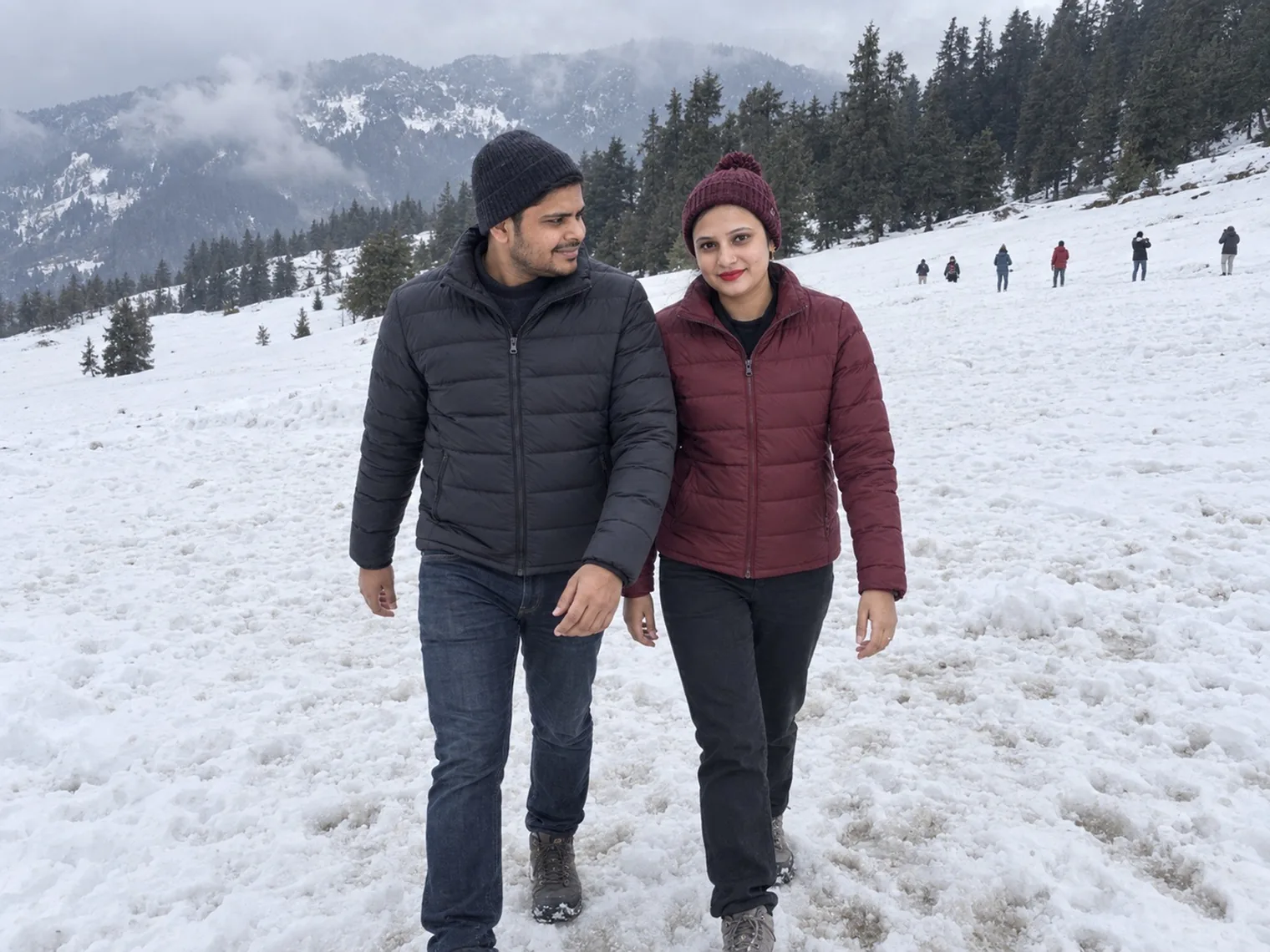
The district administration's page gives other numbers: a 500 metre drop, and snow "about 3 mts deep" from January to March. The deepest snow we've found in any dated report is about 4 feet, and three metres is closer to 10 feet. We've put both drop figures here with their sources and haven't tried to reconcile them by subtracting one from the other.
It has been a place to learn for a long time. The ITBP has run a Mountaineering and Skiing Institute at Auli since 1973-74, described in national reporting as sitting above 9,000 ft and having trained thousands of paramilitary, army and air force personnel. Until 2022 it was the force's only such school. That's a training slope for the forces, and it tells you nothing about what a visitor can use.
One fact cuts the other way. Jagdish Singh, who skied the 15 km freestyle for India at the 2018 Winter Olympics, comes from Chamoli, the district Auli sits in. He trained at the army's High Altitude Warfare School in Gulmarg.
If you can already link turns, we'd send you to Gulmarg. You'll have seen the whole of Auli by lunch on the first day, after two days getting here. That's about the terrain only. Gulmarg can run short of snow too: its own Khelo India Winter Games were postponed for lack of it in 2025 and moved to March. That's one event, and we haven't followed Gulmarg's winters the way we've followed Auli's.
Which lift do you ride, and is the ropeway one of them?
You ride the chairlift and the small surface lift inside Auli, and on a GMVN course both are already in your fee. The 4.15 km cable car up from Joshimath, the one everybody means, hasn't carried anyone since January 2023, and as of 9 September 2026 there's still no date for it to restart. The paper trail is on the ropeway's own record. You come up by road, about 45 minutes to an hour from Jyotirmath and longer in snow, and that climb is on the Jyotirmath to Auli page.
| Lift | What it is | What you pay |
|---|---|---|
| Joshimath to Auli ropeway | 4.15 km cable car, the one everybody means | Nothing. It does not run |
| Chairlift inside Auli | About 800 m, roughly five minutes, up towards the slopes | Rs 500 per person, set February 2019 |
| Ski lift | A 482 m surface lift, the one you ride while learning | Rs 100 a trip, per one operator listing |
The chairlift fare is the one you can rely on, because its last revision was reported when it happened, from Rs 300 to Rs 500. The Rs 100 for the ski lift comes from an operator page with no date on it, so treat it as a guide. The lift database lists the chairlift under the name "Uttar Pradesh": it was built in 1991, when Auli was in Uttar Pradesh, nine years before Uttarakhand existed.
The last dated report of the chairlift running is from our own day up there. On Sunday 25 January 2026, Amar Ujala reported more than 1,200 people riding it. We weren't among them, and nothing dated since says whether it runs today.
If you aren't on a course and just want a look at the slope, the main private operator publishes a day pass at Rs 500, covering two chairlift rides and seven runs on the ski lift. That's the closest thing to a day-visitor rate anybody prints, and it sits on an undated page. We found no government source that names a slope fee, in English or in Hindi.
The same operator's site still describes the Joshimath ropeway as running, a 4,150 m aerial tramway at "INR 1000 per person for up and down". Holidify still lists a Rs 1,000 cable car and a Rs 300 chairlift. Both were still up on 24 September 2026. We use that operator's course prices on this page, and it's wrong about the lift.
Is there anything official you can check before you go?
Yes, one thing. DRDO's Defence Geoinformatics Research Establishment, in Chandigarh, publishes a dated Avalanche Warning Bulletin every day of the season, and Chamoli district is on it by name. Each bulletin carries a number, a date and a validity window from 5 pm to 5 pm the next day. Uttarakhand's block lists Uttarkashi, Chamoli, Rudraprayag, Pithoragarh and Bagheshwar, each with a danger level from 1, green, to 5, black, and an altitude floor wherever the level rises above the lowest.
On 25 January 2026, the day we were up at Auli, Chamoli was at level 2 of 5, yellow, for everything above 2,400 m. Auli's own range starts at 2,500 m, so the slope was inside that band. The bulletin describes level 2 as a "partly unsafe condition" where "some avalanche paths are loaded with unstable snow", and advises valley movement with care and no movement on snow-loaded slopes.
On 15 February 2026, during the national championship, Chamoli was back at level 1, green. Those were bulletins 86 and 107, 21 numbers across 21 days, which is how we know it comes out daily.
Know its limits. It covers Chamoli as a whole, a district that runs from Karnaprayag up to the Niti valley, so one colour for all of it is a coarse instrument. It forecasts avalanche danger, and a green day tells you nothing about whether there's snow on the slope. It's seasonal, too: when we looked on 9 September 2026 there was no bulletin for that day or the day before.
The files are named by date, so you can go straight to the day you want. Don't treat it as a snow report and don't let it replace a call to your operator, but do look at it before a February trip. Nothing else official about this mountain comes out daily, and the road below has nothing like it: restrictions above Jyotirmath are police decisions at a checkpoint, and we couldn't find one that was ever published.
What does a GMVN course day involve?
It starts the evening before. GMVN asks participants to report at Auli "on the evening one day prior to the commencement of the course", with registration and equipment issue on day one. So a three-day course costs you four nights: book the room for 4, not 3.
Batches are small. The published programme allots 10 seats to each three-day batch, 30 to each seven-day batch and 10 to the 14-day certificate course, and on a mountain that fills up at New Year, 10 seats is not many. One reviewer who did the seven-day course in February 2019 described 5 to 6 hours of skiing practice a day. It's one person's account, and the only concrete shape of a GMVN day we've found.
A few more terms to know before you turn up. Bring a passport photograph, which GMVN says is needed for the ski lift and the chairlift. Damage to or loss of equipment is charged at full cost plus a penalty, on the spot. Students up to 18 need a date of birth certificate and a bonafide student certificate to get the student rate, and without them GMVN may charge the full fee.
Who should not book an Auli skiing course
Anybody who can already ski, for the terrain reasons above. You'd be paying beginner prices for a beginner mountain.
Anybody who needs it to happen on fixed dates. The course runs at the operator's discretion and the snow comes at nobody's. If your leave can't move and the trip means nothing without skiing, this is the wrong mountain to gamble a whole holiday on.
Anybody prepaying a long course months out. Buy the shortest thing that gets you started, look at the mountain, then extend. GMVN's three-day and seven-day batches run right through the season, so there's usually a next one.
Anybody with a mobility constraint. With the ropeway gone there's no step-free way up to Auli at all, and the road is the only route.
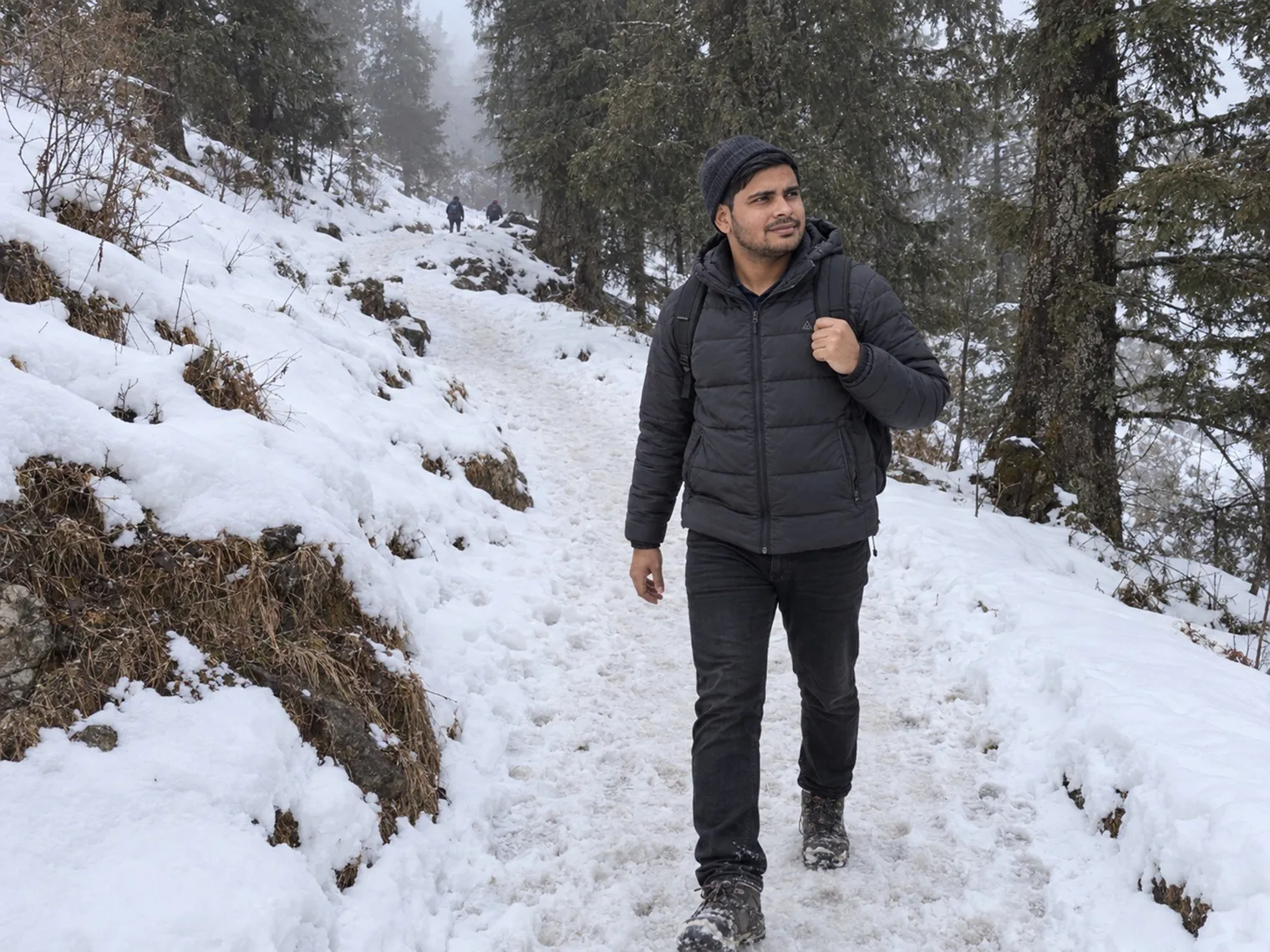
And everyone should take the altitude seriously. Auli starts at roughly 2,500 m, about the height where altitude illness starts being possible at all, and driving up from the plains in one push is what catches people out. Break the climb with a night at Jyotirmath, some 1,875 m up. Being fit won't protect you. This is general information and not medical advice.
Skiing in Auli: FAQ
How much does a skiing course in Auli cost?
A three-day beginner course from GMVN, the state tourism corporation, costs Rs 4,800 for the course alone or Rs 8,900 with dormitory lodging and meals, both inclusive of GST. Seven days is Rs 10,000 or Rs 19,900, and the 14-day certificate course is Rs 19,000 or Rs 39,000. Foreign nationals pay roughly one and a half times those rates, and Chamoli residents pay Rs 3,800, Rs 8,000 and Rs 15,000. These are the 2025-26 figures from GMVN's own fee card, and they have not moved across three published seasons.
Is GMVN or a private operator cheaper for skiing in Auli?
GMVN, clearly, if you only want the instruction. Its three-day course-only rate works out at Rs 1,600 a teaching day against Rs 2,499 to Rs 2,999 for a single day's lesson from the main private operator, so the state option is roughly 36 to 47 per cent cheaper per day. On full packages that include a bed the gap closes and the private budget tier is competitive, but that tier is a bunk bed and GMVN's is a dormitory. We could find no referral scheme attached to GMVN's courses, which is likely why almost nobody recommends it.
What happens to my money if there is no snow in Auli?
It depends on who you booked with. GMVN takes 50 per cent of the fee in advance and calls it non-refundable, but its own terms then say that 10 per cent of the advance is deducted while making refund if a course is cancelled due to inadequate snow. So on a snow failure 90 per cent of the advance comes back. The clause is written in the passive, though, and it never says whether you can invoke it or only GMVN can. The main private operator's terms name lack of snow explicitly and offer to move you to another date, with no refund. Get the answer in writing before you pay, whoever you book with.
Can you ski in Auli in December?
Sometimes, but you should not plan on it, and the state operator does not sell it. GMVN's published course programme has read January to March in every season since 2023-24 and does not carry a single December batch, even though the marketing copy on the same page says December begins the season. In our dated record, three of the last four Decembers left Auli short of snow; in the fourth, 2024, tourists were skiing by Christmas, and GMVN's courses still started on 8 January. If your December dates are already fixed, buy single days once you can see the mountain, and don't prepay a multi-day course.
How much does it cost to rent ski gear in Auli?
From GMVN's published daily card, an adult ski set is Rs 800 per pair, a student set is Rs 600, a snowboard is Rs 1,200 a day, ski gloves are Rs 400 and goggles are Rs 200. A standalone ski lesson is Rs 400 per person per day and a snowboard lesson is Rs 600. If you are enrolled on a course, boots, poles and the lifts are already inside the course fee. Older listings quoting Rs 300 for goggles and Rs 500 for gloves are two seasons out of date.
Is Auli good for beginners?
It is the best value we found at Auli for a first week on skis. The slopes total about 3 km, roughly 2.5 km of that is graded easy and none of it is graded difficult, so there is very little here that can frighten somebody in their first week. Instruction from the state operator costs Rs 1,600 a day. Half a foot of snow is enough to teach a beginner, which is far less than the four feet a national championship needs, so a learner's trip survives seasons that a competition would not.
Is Auli worth it if you can already ski?
Probably not. The vertical drop is 367 metres, nothing on the mountain is graded difficult and the intermediate terrain amounts to about half a kilometre, so an experienced skier will have covered everything in a day. Gulmarg is where people who can already ski go instead, for its terrain. That says nothing about snow: Gulmarg's own Khelo India Winter Games were postponed for lack of it in 2025 and moved to March, one event, and we haven't followed Gulmarg's winters the way we've followed Auli's.
Do you need to book a ski course in Auli in advance?
Yes for GMVN, because the batches are small: its published programme allots 10 seats to each three-day batch, 30 to each seven-day batch and 10 to the 14-day certificate course. Booking means sending an application form with 50 per cent of the fee by bank draft, and the balance is paid on arrival. You are also asked to report at Auli the evening before the course starts, so a three-day course costs four nights of your leave.
What we couldn't verify
- Whether GMVN or the main private operator has published 2026-27 batches, or changed a single fee. GMVN's skiing page stopped opening for us in early September 2026, so every GMVN figure here is from its 2025-26 card, in the copy the Internet Archive saved on 14 January 2026. A phone call to GMVN will beat us here. The private operator's last listed batch ends on 1 April 2026. Only TrekNomads has published 2026-27 dates so far.
- Whether GMVN's course fee includes the skis. Its card says the fee includes "Ski equipments (i.e. Ski Boots & Sci Pole only)", and doesn't mention skis. If they're extra, an adult set is Rs 800 a day on its daily card, so ask before you pay.
- Three prices we can't pin down. Which of its two day-lesson prices, Rs 2,499 or Rs 2,999, the private operator would charge; whether its "69,989 in a Group" is per person or for the group; and GMVN's 14-day fee with lodging. GMVN's own card says Rs 39,000 in every version we read, while a Chamoli newspaper report on a live batch, 8 January 2025, printed Rs 39,900. We've used GMVN's figure.
- Whether a day visitor who isn't on a course pays any slope fee, and whether the chairlift and ski lift are running now. The only slope figure anybody prints is the operator's undated Rs 500 day pass, and the last dated report of the chairlift carrying riders is 25 January 2026.
- Who operates Auli's snow-making equipment, which slope it covers, and whether it has ever run for its stated purpose. The machinery dates from around 2010-11. Pioneer Edge called it unused showpieces in March 2025, and in January 2026, when a local protest movement made an issue of it, ETV Bharat described the system as run down. Pages promising artificial snow as a backup, like auli-resort.com's page on the artificial lake, put nothing behind the promise, and we can't prove the opposite either.
- Dates for the 2026-27 winter carnival and championship. None were set as of 9 September 2026, and the 2026 event moved three times before it ran.
Working out which course to book?
Send your dates and your level to hello@wctoindia.com. We'll tell you which of the prices on this page fits, what we'd ask the operator in writing first, and what the same weeks did in each of the last four winters. If you've skied here recently or hold a newer fee card, tell us and we'll credit you by name. We take no commission from anybody.

Sources
GMVN's course fees, its equipment card, its terms and conditions, its stated season and its batch calendar all come from GMVN's own snow skiing page. That page stopped opening for us in September 2026, so we read it in full in the Internet Archive's dated copies of it, saved on 16 September 2024, 6 December 2024, 6 March 2025, 6 December 2025 and 14 January 2026. The same fee table, labelled 2025-2026, was mirrored by euttaranchal, 10 Aug 2026, a private Dehradun company, until it took its tourism pages down in September 2026. Private course prices, the 14-day group figure and the private cancellation terms: auliskiing.in, read 9 Sep 2026, with the Rs 2,499 day lesson and the Rs 500 day pass from the same operator's day-pass page; its ropeway listing is on the same site, read 9 and 24 Sep 2026. The third operator's package price and its 2026-27 batch dates: TrekNomads, read 9 Sep 2026. Slope length, grading, vertical drop, the stated season and the lift list: skiresort.com and its lift page, whose measurements we use and whose season and lift status we do not. The 500 m drop and the three-metre snow claim: Chamoli district administration. The chairlift's Rs 500 fare and its February 2019 revision: Amar Ujala, 6 Feb 2019. The last dated chairlift rider count: Amar Ujala Chamoli, 25 Jan 2026. The avalanche bulletin, its scale and its Chamoli rows: DRDO's Defence Geoinformatics Research Establishment, read as PDFs for 25 Jan 2026 and 15 Feb 2026. ITBP's institute at Auli, established 1973-74: PTI via Outlook India, 17 Jul 2022. Jagdish Singh's training at Gulmarg: The Quint, with the Chamoli detail from ESPN. Gulmarg's own postponed 2025 games: News on Air, with the 9 to 12 March rescheduling. The half-foot beginner threshold against the four feet a national event needs, Santosh Kunwar of the Auli Skiing School: Scroll.in, 18 Mar 2025. Snow-making equipment described as unused showpieces: Pioneer Edge, 18 Mar 2025, and the January 2026 protest that made an issue of it: ETV Bharat, 15 Jan 2026. The artificial-snow claim: auli-resort.com on the artificial lake. The Rs 1,000 cable car and Rs 300 chairlift still listed: Holidify, read 9 and 24 Sep 2026. Tourists skiing on Christmas Day 2024: Amar Ujala Chamoli, 26 Dec 2024; GMVN's courses starting on 8 January 2025: Amar Ujala Chamoli, 8 Jan 2025. No paid links and no affiliate links appear on this page, and we hold no commercial arrangement with any operator named on it.
Changelog
- First published.
- Rewritten around our own trips. No fee, fare or distance changed. Corrected the December record: tourists were skiing at Auli on Christmas Day 2024, so three of the last four Decembers were short of snow, not four.